03 / Model / 03
The pitch is
only the beginning.
To the sport we add school, responsibility and a concrete next step. Football is a tool, not a goal.
01Why it does not end with sport
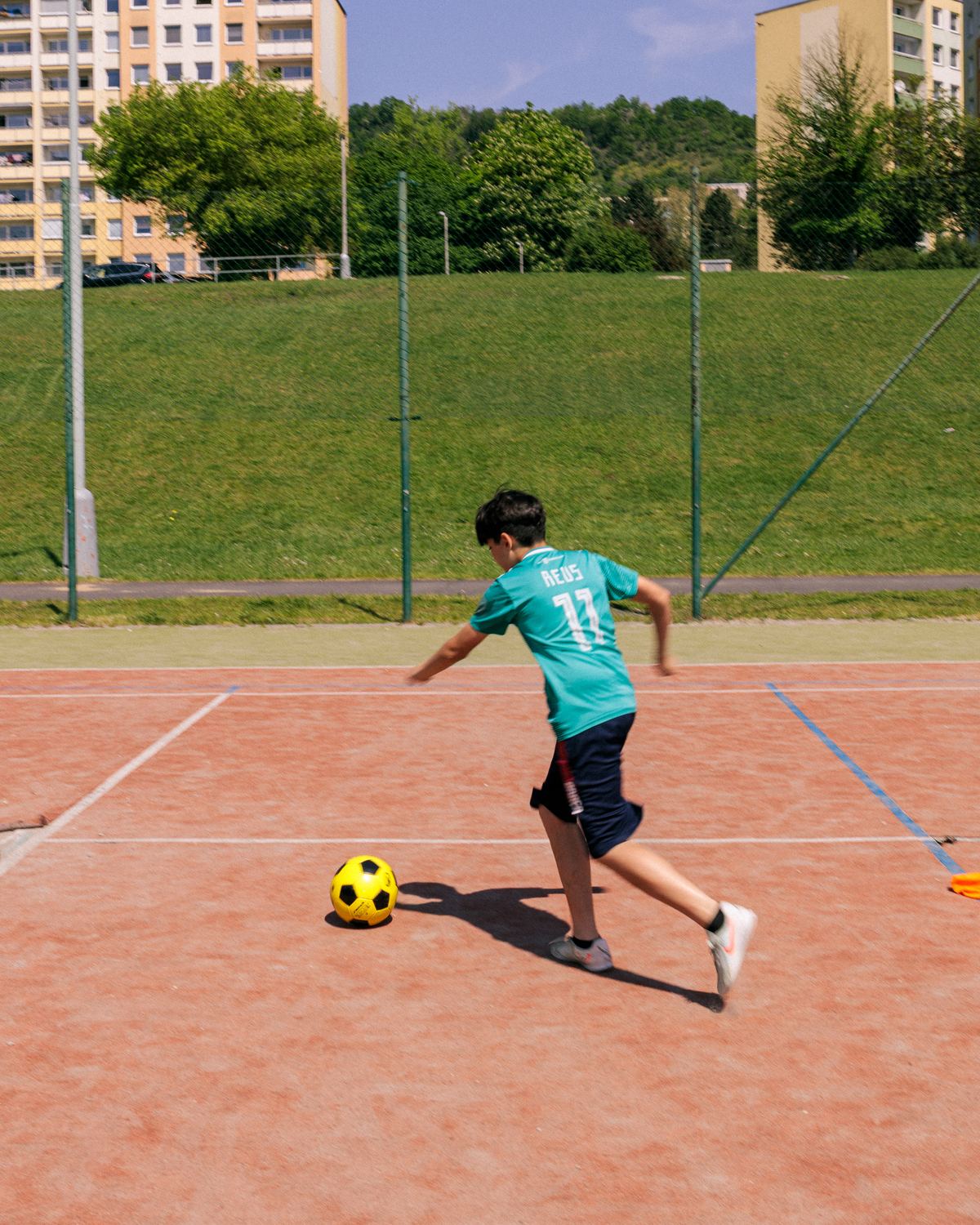
Only a few of the children who go through Mongaguá will become professional footballers. That is fine — it was never the goal.
The goal is that after five years of training a child has finished school, has the experience that persistence leads somewhere, and has someone to call when they do not know what to do next.
Football is the tool. Change is the goal.
02Where it leads
Six routes that
open up
Not every one for everybody. But each of them is concrete and for each of them we can show afterwards who took it.
01
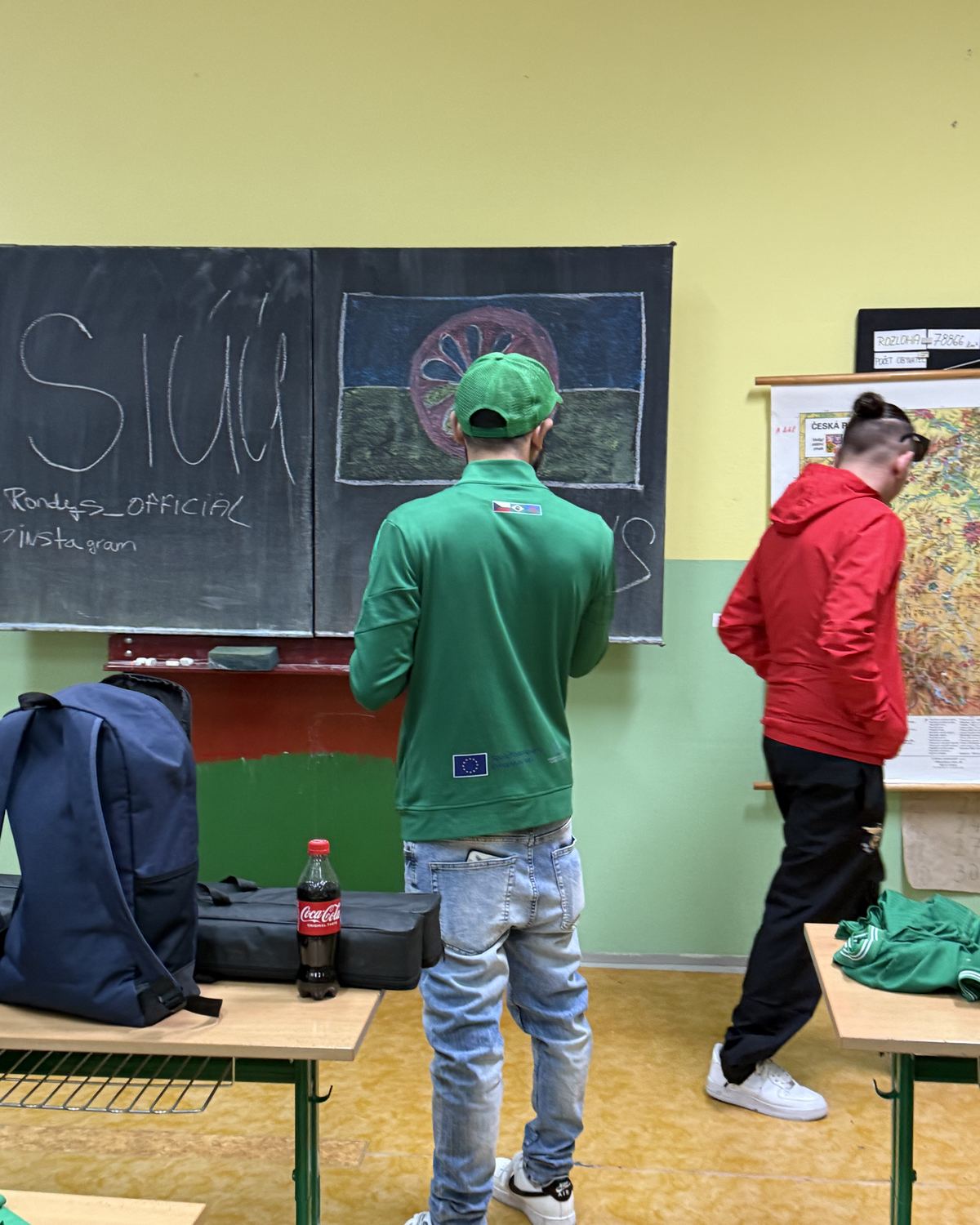
School as a condition
If you want to play, you go to school. Training is the lever for working on attendance and results — and it is a lever that works.
02
Tutoring after training
A pilot in two locations. The rule about school has applied from the start, but only now is it getting a proper setting.
03
A route into a club
A transfer into an organised club is a concrete, measurable step. Daniel Hajaš went from Mongaguá all the way to the under-19 futsal national team.
04
International experience
The development programme of the Norwegian organisation MOT, focused on young people’s development and the prevention of risky behaviour. Funded by the Norway Grants.
05
Work and a direction
For older players the question is what comes after school. This is where skills-based help from companies fits best — mentoring, work experience, recruitment.
06
Coming back as a coach
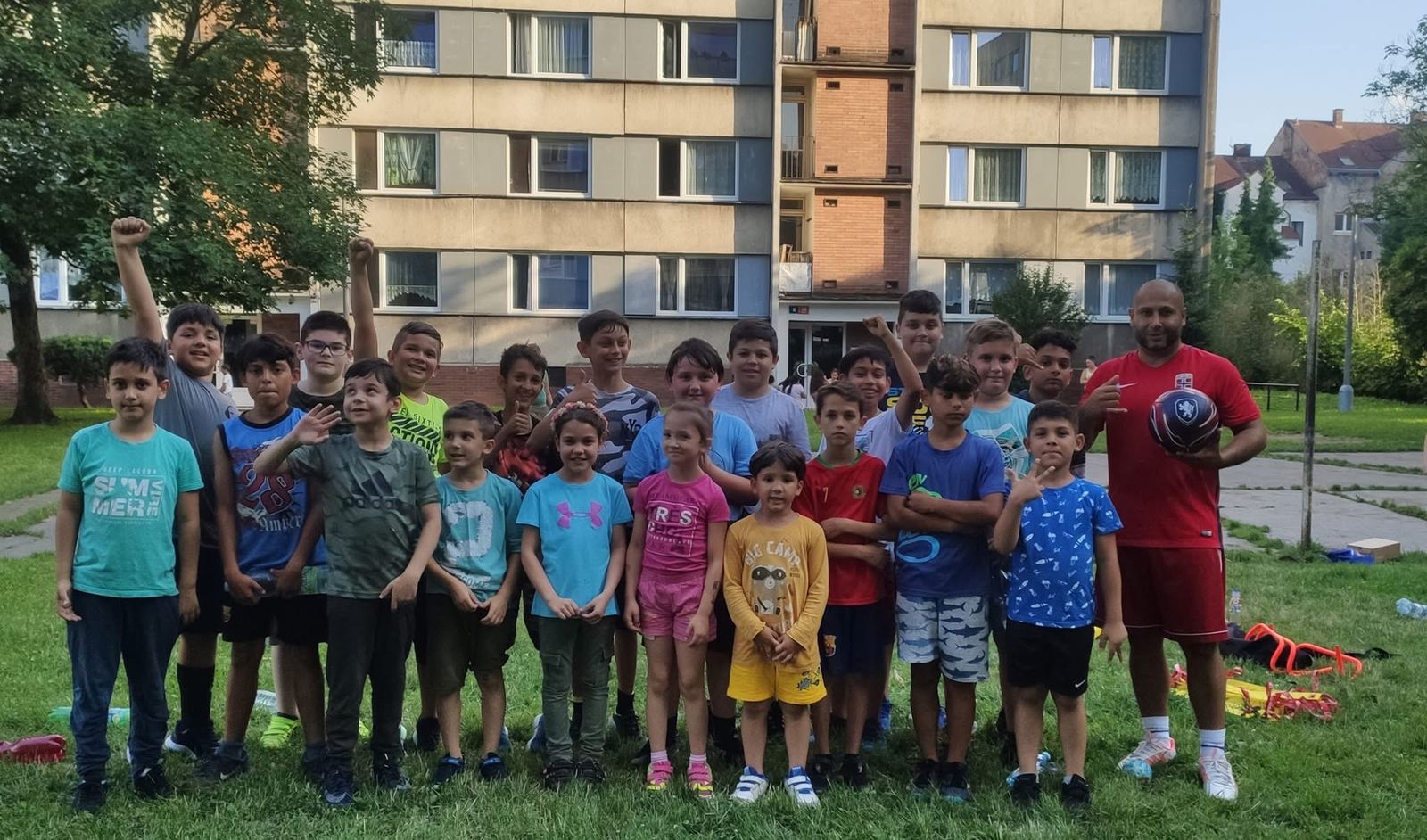
The strongest result: a player who stays and starts leading the younger ones. That closes the model and starts it again.
1
Mongaguá player in the U19 futsal national team
2
locations with pilot tutoring
4
public awards including the Gratias Tibi prize
10+
years of work with the first cohorts
The missing figures on school attendance and transfers will come from the measurement system being set up.
03Where companies fit best
Here money
is not the main thing.
In the first two parts of the model we mainly need equipment and facilities. Here what the company knows, and who the children meet there, starts to matter more.
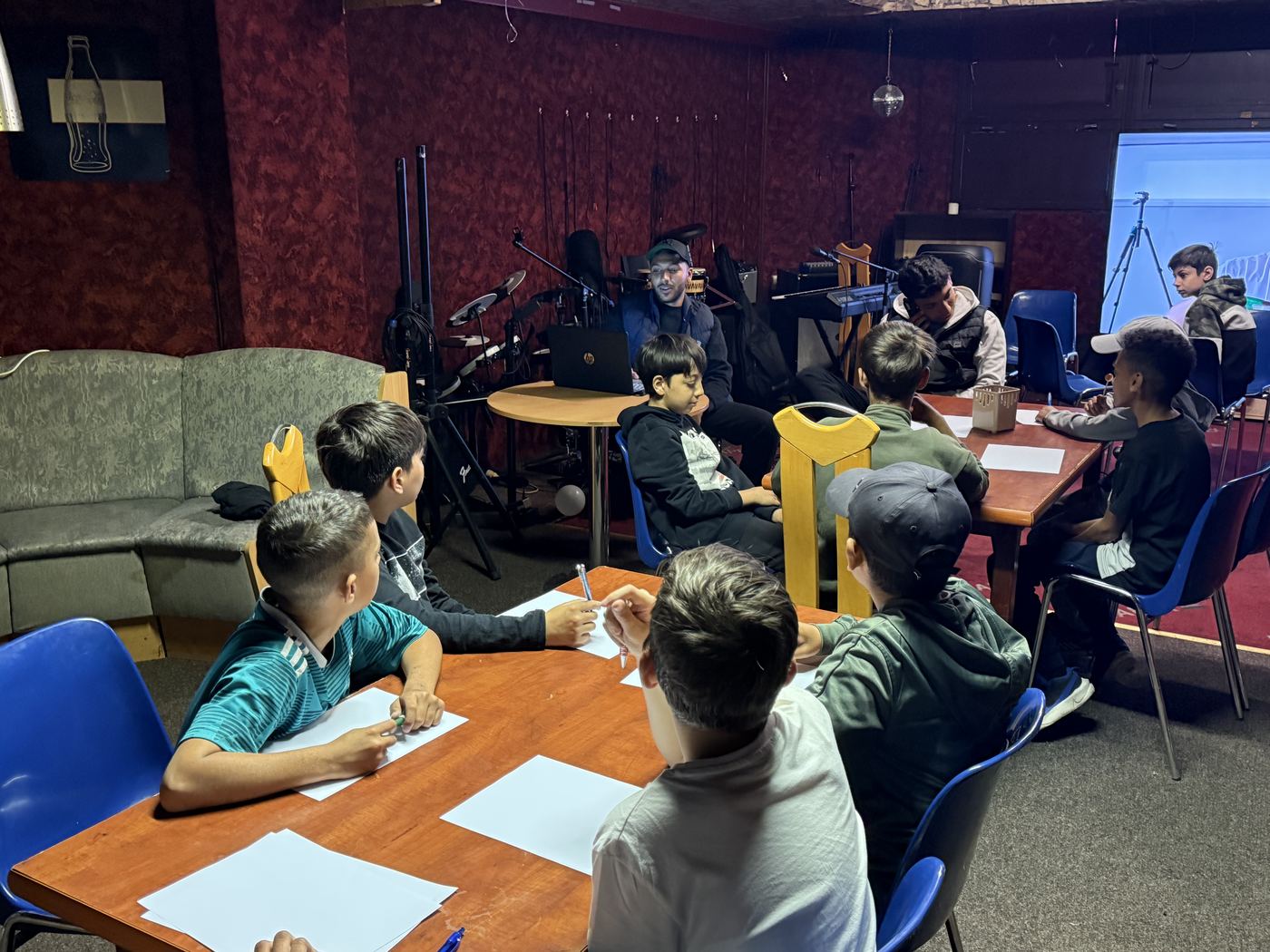
- mentoring for older players deciding what to do after school
- a tour of the workplace — often the first contact with what work looks like
- part-time jobs and work experience for those over sixteen
- workshops on financial literacy, IT or languages
- help with preparing for entrance exams and choosing a field
- a long-term partnership on a tailored educational programme
04Frequently asked
What people ask most often
Few, and that was never the goal. Success is a finished school and the experience that persistence leads somewhere. A transfer into a club is just the most visible version.
We do not enforce, we negotiate. The coach knows where everyone stands and deals with it with the child and the family before it becomes a problem.
Not systematically yet — and we do not want to invent numbers. We are setting up a single way of collecting data so that in a year we can prove what changed. In detail on the Impact page.
Concrete information about what happened in the joint activities, authentic content from the field and the chance to involve employees. We do not sell a logo on a website.
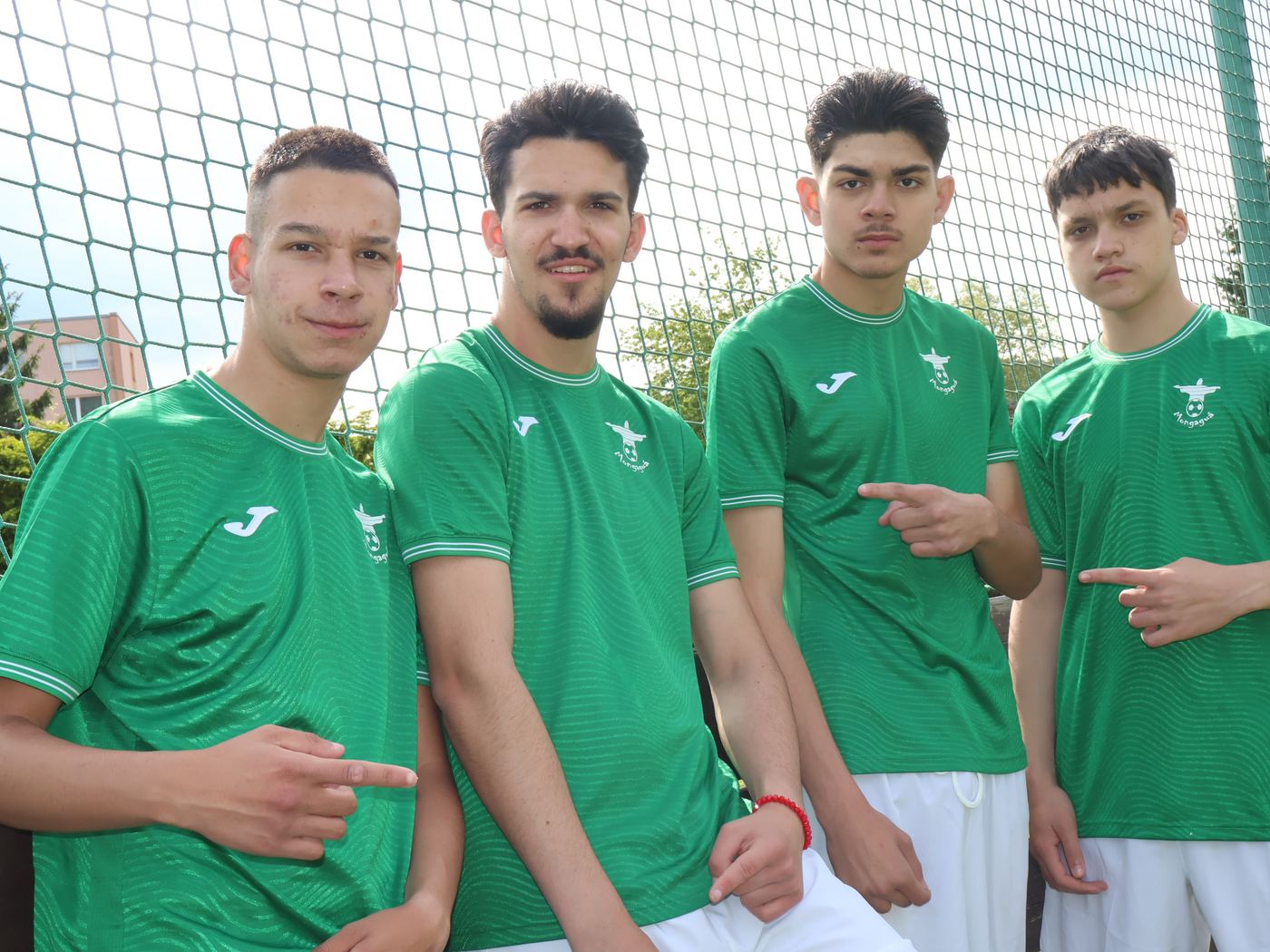
From the Mongaguá team he made it into the “A” squad of top-tier Rapid and into the under-19 futsal national team. There are others in the teams who can take the same route.
Next part of the model
This is where what your company knows fits best.
Mentoring, work experience, professional volunteering or a joint educational project. Money is only one of the options.